
Introduction
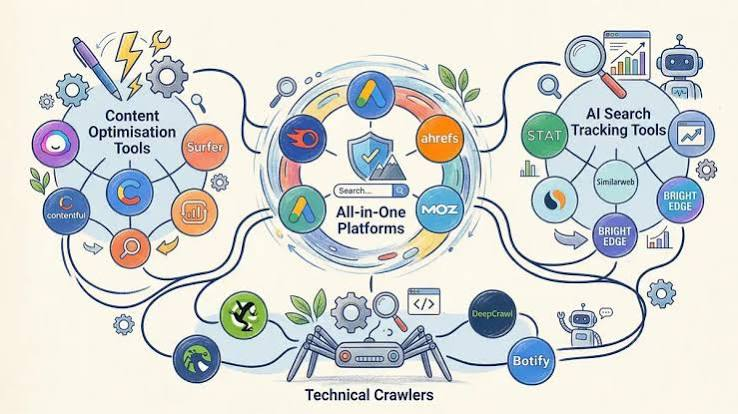
Search engine optimization (SEO) is essential for increasing website visibility, attracting organic traffic, and growing an online presence. However, SEO involves many tasks, including keyword research, content optimization, technical audits, competitor analysis, link building, and performance tracking. Completing these tasks manually can be time-consuming, especially for beginners and small businesses. AI SEO tools simplify the optimization process by using artificial intelligence to automate research, analyze data, and provide actionable recommendations.
Today, businesses, bloggers, digital marketers, agencies, and website owners use AI SEO tools to improve efficiency and make better decisions. These tools can identify valuable keywords, optimize website content, monitor rankings, generate SEO-friendly content ideas, and uncover technical issues that affect search engine performance. By automating repetitive SEO activities, users can focus more on strategy and content quality.
This guide explains everything you need to know about AI SEO tools, including what they are, why they are important, how to choose the right platform, their benefits, limitations, common mistakes, frequently asked questions, and expert recommendations. Whether you’re new to SEO or looking to improve your optimization workflow, this guide provides a solid starting point.
What Are AI SEO Tools?
AI SEO tools are software applications that use artificial intelligence, machine learning, and data analysis to improve search engine optimization efforts. They help users perform keyword research, optimize content, analyze competitors, identify technical SEO problems, monitor website performance, and automate repetitive optimization tasks.
Modern AI SEO tools often include features such as keyword suggestions, content scoring, backlink analysis, site audits, SERP tracking, content generation, readability analysis, and SEO reporting. These capabilities help users make informed decisions while improving overall website performance.
Why Are AI SEO Tools Important?
AI SEO tools help simplify complex optimization tasks that would otherwise require significant time and expertise. Instead of manually analyzing large amounts of data, users receive intelligent recommendations that support better decision-making and faster implementation.
These tools also improve efficiency by identifying optimization opportunities, tracking performance, and helping websites adapt to changing search engine algorithms. As online competition continues to increase, AI SEO tools provide valuable support for maintaining strong search visibility and attracting more organic traffic.
Step-by-Step Guide to Choosing AI SEO Tools
Step 1: Define Your SEO Goals

Begin by identifying what you want to achieve with SEO. Your objectives may include improving keyword rankings, increasing organic traffic, optimizing content, fixing technical issues, or analyzing competitors.
Clear goals help you choose software that supports your specific optimization strategy.
Step 2: Compare Core Features
Different AI SEO tools offer different capabilities. Evaluate features such as keyword research, site auditing, competitor analysis, backlink monitoring, content optimization, reporting, and rank tracking.
Selecting software with the right feature set improves both productivity and long-term SEO performance.
Step 3: Check Ease of Use
Beginners should prioritize platforms with intuitive dashboards, clear reports, and beginner-friendly tutorials.
Easy-to-use software reduces the learning curve while making SEO tasks more manageable.
Step 4: Evaluate Keyword Research Tools
Keyword research remains one of the most important aspects of SEO.
Choose software that provides keyword suggestions, search volume estimates, ranking difficulty, and related keyword opportunities to support effective content planning.
Step 5: Analyze Content Optimization Features
Many AI SEO tools evaluate readability, keyword placement, heading structure, internal linking, and content quality.
These recommendations help create well-optimized pages that satisfy both users and search engines.
Step 6: Review Technical SEO Capabilities
Technical SEO features identify website issues such as broken links, duplicate content, missing metadata, slow loading pages, and crawl errors.
Fixing these problems improves website performance and user experience.
Step 7: Consider Reporting and Analytics
Choose tools that provide easy-to-understand reports and performance dashboards.
Monitoring traffic, keyword rankings, and optimization progress allows you to measure SEO success over time.
Step 8: Test Before Purchasing
Most AI SEO platforms offer free trials or limited plans.
Testing multiple tools allows you to compare usability, reporting accuracy, feature quality, and overall value before purchasing a subscription.
Benefits of AI SEO Tools
- Simplifies keyword research.
- Improves content optimization.
- Saves valuable time.
- Automates repetitive SEO tasks.
- Identifies technical website issues.
- Helps improve search rankings.
- Supports competitor analysis.
- Generates SEO recommendations.
- Tracks keyword performance.
- Improves workflow efficiency.
- Suitable for beginners and professionals.
- Supports long-term organic growth.
Disadvantages / Risks
- Premium subscriptions can be expensive.
- Recommendations still require human review.
- Learning advanced features takes time.
- Data accuracy varies between platforms.
- AI cannot replace SEO strategy.
- Some tools have limited free plans.
- Search engine algorithms constantly change.
- Overreliance may reduce manual SEO skills.
Common Mistakes to Avoid
One common mistake is relying entirely on AI recommendations without understanding SEO fundamentals. While AI tools provide valuable insights, successful optimization still requires thoughtful planning, high-quality content, and ongoing analysis. Learning basic SEO principles helps users make better decisions when interpreting AI-generated suggestions.
Another mistake is focusing only on keywords while ignoring user experience. Search engines increasingly reward websites that provide valuable content, fast loading speeds, mobile responsiveness, and clear navigation. AI tools should support a balanced SEO strategy rather than simply increasing keyword usage.
Frequently Asked Questions
1. What are AI SEO tools?
AI SEO tools are software applications that use artificial intelligence to assist with keyword research, content optimization, technical SEO, competitor analysis, and search performance monitoring.
2. Who should use AI SEO tools?
Bloggers, business owners, marketers, agencies, ecommerce stores, website managers, freelancers, and SEO professionals can all benefit from AI SEO tools.
3. Can AI SEO tools improve search rankings?
Yes. AI SEO tools help identify optimization opportunities, improve content quality, resolve technical issues, and support better SEO strategies that can contribute to stronger search engine rankings.
4. Are AI SEO tools suitable for beginners?
Yes. Many platforms provide beginner-friendly dashboards, tutorials, guided recommendations, and simplified reports that make SEO easier to understand.
5. Do AI SEO tools replace SEO experts?
No. AI SEO tools assist with research, analysis, and automation, but human expertise remains essential for strategy, content quality, and long-term optimization planning.
6. How do I choose the best AI SEO tool?
Identify your SEO goals, compare available features, evaluate keyword research capabilities, review reporting tools, test free versions, and select software that fits your workflow and budget.
Expert Tips & Bonus Points
Use AI SEO tools to support your decision-making rather than relying on them completely. Combine AI-generated recommendations with quality content, user-focused optimization, and continuous learning to build sustainable search engine performance.
Review your website regularly instead of performing SEO only once. Search engine algorithms evolve continuously, making routine audits, content updates, and performance monitoring essential for maintaining strong rankings and consistent organic traffic.
Conclusion
AI SEO tools have become valuable resources for improving website visibility, simplifying optimization tasks, and supporting long-term search engine success. From keyword research and technical audits to content optimization and competitor analysis, these intelligent platforms help businesses and content creators work more efficiently while making data-driven decisions. Choosing the right AI SEO tool begins with understanding your objectives and selecting features that match your SEO strategy.
Although artificial intelligence significantly improves SEO workflows, lasting success still depends on high-quality content, excellent user experience, and ongoing optimization. Human expertise remains essential for creating valuable information, understanding audience intent, and adapting to evolving search engine algorithms.
By following the recommendations in this guide, beginners can confidently explore AI SEO tools and build stronger optimization strategies for their websites. With consistent effort, continuous learning, and responsible use of AI technology, these tools can become powerful partners in achieving sustainable organic growth and improved search rankings.